By Tricia Chérie
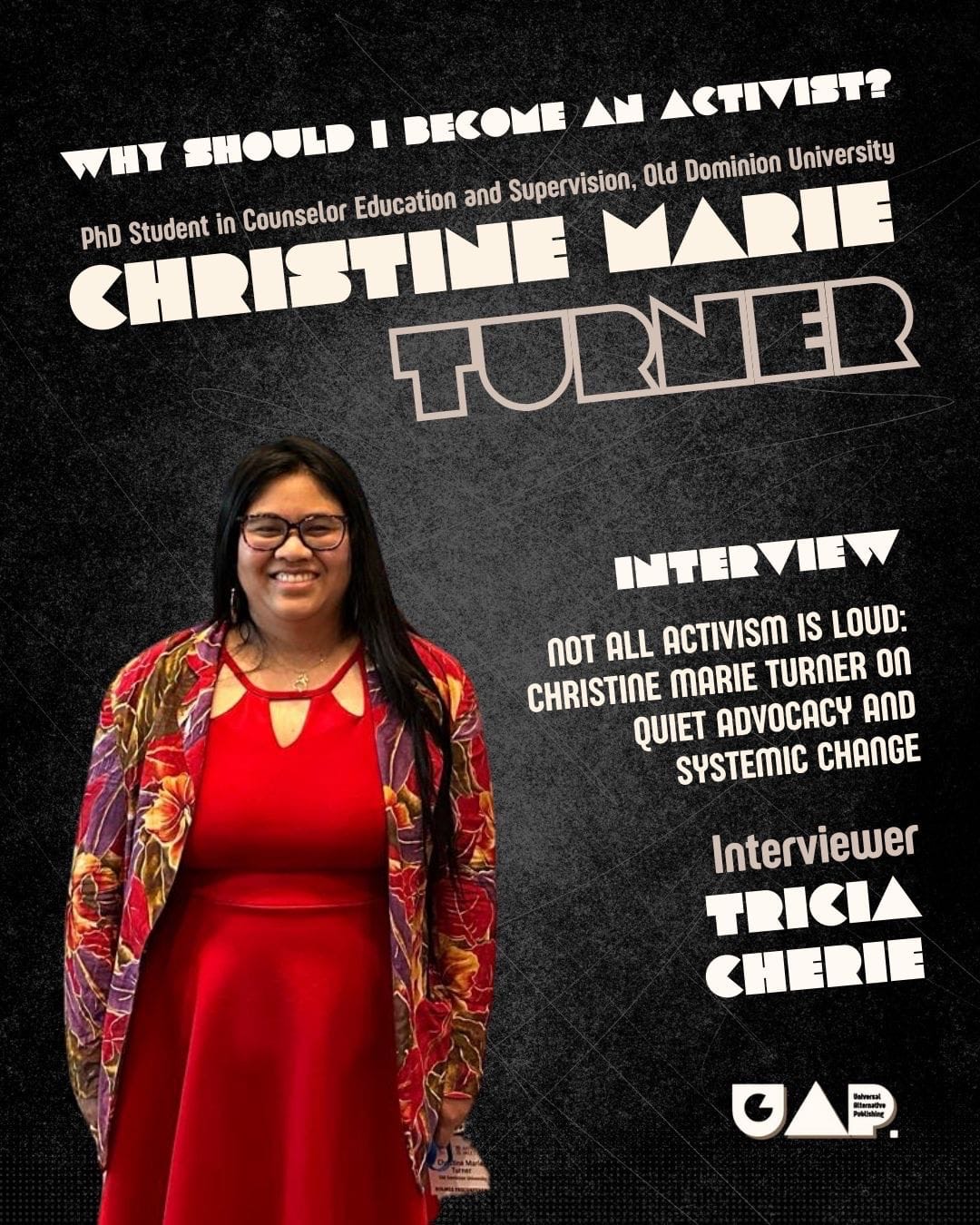
Tricia Chérie interviewed Christine Marie Turner for this article.
Introduction
Many people hear the word “activism” and picture protest signs, megaphones, and marches—but advocacy is not always loud. What if the most meaningful activism starts with something as simple as kindness? Small, everyday acts of empathy—listening, showing up, making space for others—can create ripples of change in ways we often overlook.
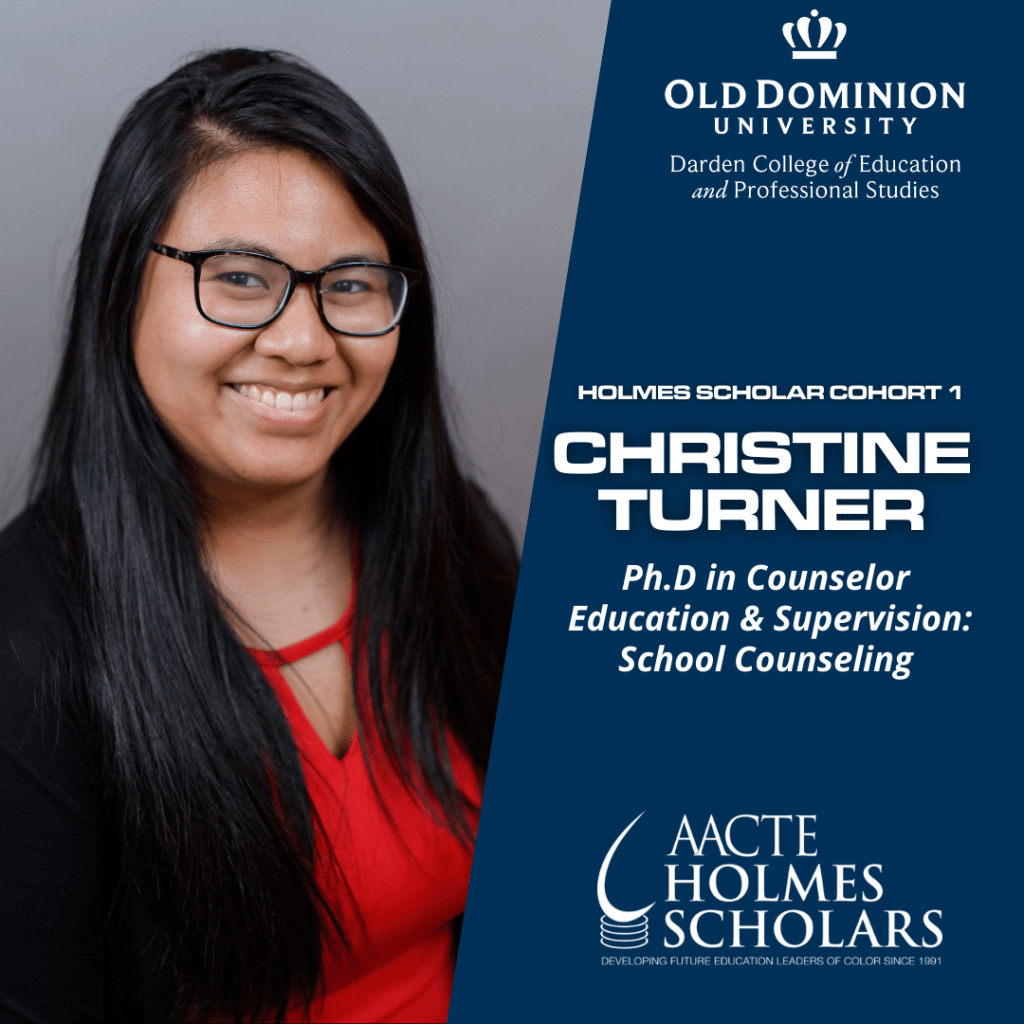
As a Ph.D. candidate in Counselor Education and Supervision at Old Dominion University, Christine Marie Turner explores the intersection of mental health, education, and social advocacy. Drawing from her experiences as a school counselor and community advocate, she works to dismantle mental health stigmas in BIPOC communities and challenge outdated perceptions of school counseling.
Turner’s activism is shaped by a lifetime of experiences—from witnessing her Filipino immigrant father become the first in his family to attend college to navigating predominantly white academic spaces where she was often the only Asian American in the room. She has seen firsthand how systemic barriers—racial, economic, and educational—impact access to education and mental health care. Rather than accepting these realities, she has made it her mission to dismantle them.
In this interview, Turner shares insights from her journey, the challenges she has witnessed, and her vision for a more equitable future in education and mental health.
Your Journey into Activism & Advocacy
PR CARNET WORLD: What inspired you to combine counseling and activism? Was there a specific moment that sparked your passion for advocacy?
Christine Marie Turner: My path was shaped by many experiences. My father, an immigrant from the Philippines, grew up in poverty and became the first in his family to attend college. My parents were both teachers and instilled in me a deep love for learning.
I was initially drawn to law in college but realized I didn’t thrive in high-conflict environments. Then I took a Sociology course on Social Theory, which ignited my passion for systemic injustice. Later, in a class on Social Problems, I studied issues like educational inequities, poverty, and healthcare disparities, which reaffirmed my desire to pursue advocacy.
After graduating, I joined AmeriCorps as a college advisor for low-income high school students. Many of these students confided in me about trauma, family struggles, and mental health challenges. Without formal mental health training, I often felt powerless, but collaborating with school counselors showed me the transformative impact they had. That experience led me to counseling, where I found a way to merge my passions for mental health, education, and advocacy.
Mental Health, Education & Social Justice
PR CARNET WORLD: How do you define activism in the context of mental health and education?
Turner: School counseling allows me to blend activism, mental health, and education. Many still see school counselors as just “guidance counselors” handling schedules and discipline. In reality, we provide critical mental health support in schools, addressing rising crises like suicidal ideation and self-harm.
Now, as a Ph.D. student, I’m committed to challenging misconceptions about school counseling and expanding mental health access in marginalized communities. Research, writing, and teaching are forms of activism—especially when they challenge stigma and make mental health support more accessible.
Conclusion
Turner’s work reminds us that activism isn’t always loud. It happens in quiet moments—advocating for students, expanding mental health care, and challenging inequities. Whether through research, mentorship, or counseling, her commitment to social justice proves that activism is not just about speaking—it’s about listening, showing up, and making space for others.
For those unsure where to start, she leaves us with this:
“You have your own talents, skills, and qualities that are valuable. There is only one of you in this world, and because of you, great things can happen if you choose to make a difference. Trust and believe in yourself—the world needs you.”
This interview has been edited for length and clarity.
 No Apologies
Leave a comment