
Data Journalist Lizzie Walsh on Healthcare Reporting, The Future of Local News, and Why Algorithms Can’t Replace Journalism
This interview was initially conducted by Gökhan Çolak and Semay Buket Şahin for PR Carnet World. Introduction and additional reporting by Tricia Chérie
Before Lizzie Walsh was investigating lead pipes and climate injustice, she was ghostwriting for Big Pharma—think Mad Men with FDA approvals.
She spent years translating clinical jargon into slick ad copy before trading marketing decks for data dashboards. Now, as a data journalist at The City, she’s building interactive tools that let New Yorkers check if their tap water is toxic—and writing stories that make spreadsheets feel human.
In this interview, Lizzie unpacks her pivot from corporate copywriter to watchdog reporter, the art of translating science without dumbing it down, and why the future of journalism depends on turning cold data into stories that actually stick—TikToks, trending topics, and all.
From Ad Copy to Accountability
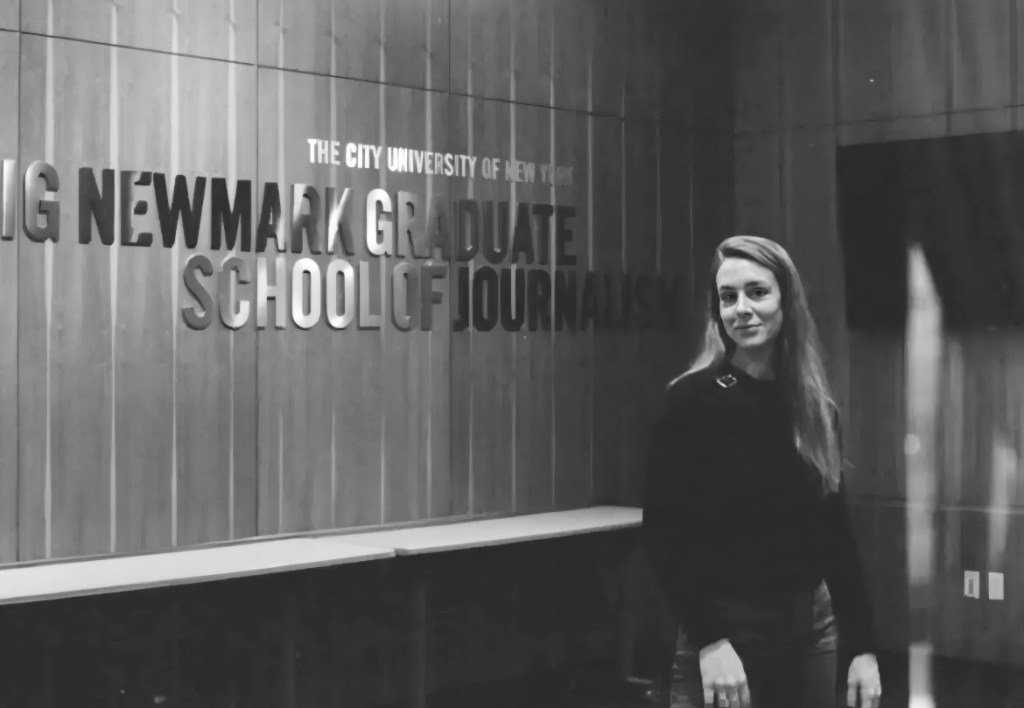
Q: How did five years in healthcare advertising shape your journalistic voice?
Lizzie: Most of my copywriting involved making clinical trial data understandable—for doctors, consumers, whoever. I got used to writing clearly, working fast, and handling brutal edits. That carried over to journalism.
Now I focus on how to visualize what numbers are telling me, which is central to how I report stories today.
Q: What was the exact moment you knew you were done writing for Big Pharma—and ready to investigate the systems instead of sell them?
Lizzie: It was more of a slow burnout at work, but there were a few instances that shook me up more than others. There was one product I worked on (which I’ll leave anonymous here so I don’t receive a contract violation) that was pretty new to the market. I helped direct a sales video and wrote several “explainer-type” pieces about it. It was a strange, black-box drug that required administration by a trained optometrist—not a doctor—via injection into the eye. This therapy was for a very rare disease, where the typical prognosis for a suffering patient was less than a year to live. I was a very young copywriter and didn’t know much about the industry yet, so I didn’t leave the job or request a client transfer at that time.
A year or so after I wrapped up work for that client, I noticed a giant disclaimer on the website I had built. The product had been pulled from the market for causing early deaths. I couldn’t tell whether those deaths were due to malpractice in how it was administered or because the drug itself triggered several adverse reactions. Either way, the whole thing forced me to take a hard look in the mirror at the kind of work I was doing, and at who was really benefiting from it.
Making Science Make Sense
Q: Would you describe your role as bridging science, data, and the public?
Lizzie: Totally. In advertising, we were called “creatives,” but that job was all rules. Journalism is where creativity actually lives, especially in science reporting, where you start with a jargon-filled press release. The goal isn’t just to define terms — it’s to choose what matters most, shape tone, and keep people engaged.
Q: You’re handed a technical press release and a massive spreadsheet. What’s your process for turning that into a story that sticks?
Lizzie: I’d start by reading the press release and digging into the spreadsheet to clean and understand the data. Honestly, I might look at the spreadsheet first—the numbers are often more reliable than the company’s spin.
In advertising, you’re taught to take a press release at face value. In journalism school, you learn only to use it if you can corroborate the claims with multiple independent experts.
If a release isn’t trustworthy, that’s a story in itself. But I’d always begin with the data, since it’s harder to come by and there’s almost always a story hidden there—even if it ultimately doesn’t get written or published.
Inside America’s Broken Health Hustle
Q: What did you learn from working within the U.S. healthcare system?
Lizzie: That it’s way more broken than people think. There are so many players — pharma companies, insurers, PBMs (Pharmacy Benefit Managers), all chasing profit. That’s what pushed me into journalism. I wanted to use my writing and data skills for something that helps actual people.
Q: What’s one persistent myth about the U.S. healthcare system that drives you nuts—and why do you think it’s so hard to kill?
Lizzie: That every prescription drug exists to fill a genuine medical gap. I think the public is starting to realize that many over-the-counter medications are just a cash grab (thanks in part to Grant Harting, a really great TikTok creator who explains what OTC drugs do from a strictly clinical lens).
These practices are in the interest of the pharmaceutical companies, not the public. More specialized drugs are on the market than ever before, and we’re paying far too much for them, even as many other treatments show better efficacy and are backed by more longitudinal studies. Doctors often don’t actually want to put patients on the new, fancy drug because they know that all of this is true. But pharmaceutical companies are far more powerful than we realize.
Another related issue is direct-to-consumer drug advertising. Why do we need an Instagram ad about a new drug for one of our conditions if we can trust our doctor to prescribe it? Consumer advertising is causing the public to lose trust in their doctors and rely instead on pharmaceutical marketing to guide health decisions.
Sometimes this happens if you don’t have a doctor you can trust to stay current on new therapies for a rare disease. But in the end, prescribing decisions should come from doctors. The advertising world is slowly diminishing the role of healthcare professionals, and this is one of the ways it shows up.
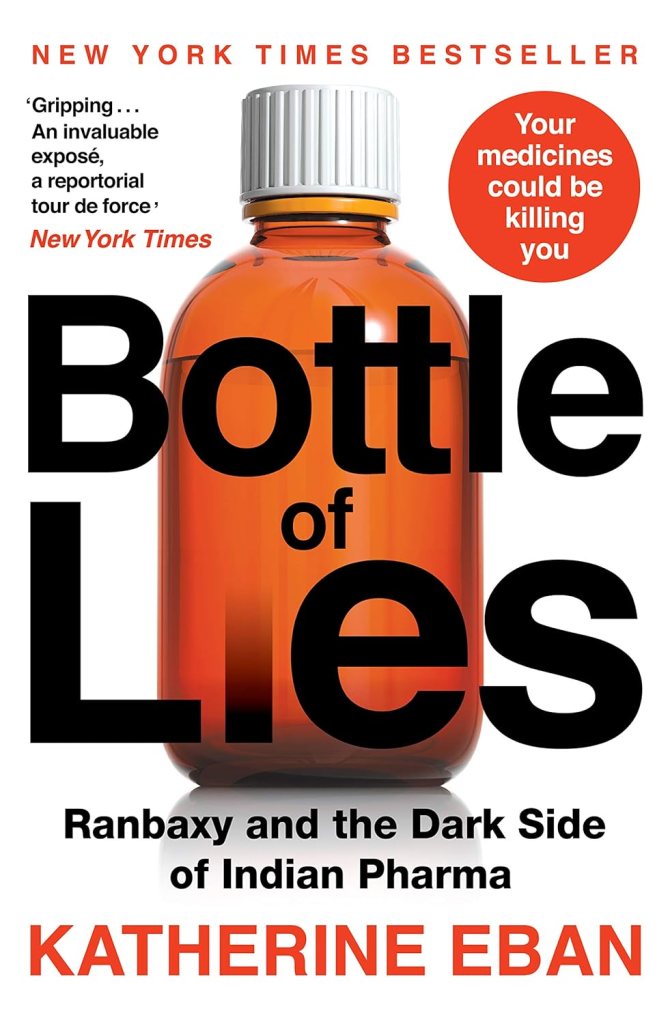
For a great read on the inner workings of the pharmaceutical industry, which touches on the debate between generic and specialized drugs, I recommend Katherine Eban’s “Bottle of Lies.” It’s a great book that began with a deep investigation into why some generic drugs don’t work. I read this as I was thinking about leaving the healthcare advertising industry, and now Eban is my professor at the J-School!
Stories That Hit Home
Q: Which story from your reporting still hits you in quiet moments—whether because of who you interviewed, what you uncovered, or what it left unresolved?
Lizzie: I plan to follow up on this issue with another investigation this semester. The “One Big Beautiful Bill” threatens to decimate these centers even further, since patients who have lost Medicaid will be forced to rely on facilities meant to serve the uninsured. They’ll be stretched beyond capacity.
I’m in the process of researching the federal administration’s plans to replace doctors with digital, wearable technology once this crisis truly begins, which is likely to happen within the next year or so. Rural healthcare is a microcosm of where our entire nation’s healthcare access is headed: limited, far away, overbooked, and underfunded.
Q: Which story have you worked on that felt like a full-circle moment—where all your skills, experiences, and values finally clicked into place?
Lizzie: I just published my many-months-long lead investigation with THE CITY, where I interned this summer. The story began in my spring semester data class and was initially intended to explain why so many people in New York City purchase bottled water.
My professor helped me broaden the story and search within publicly available databases. I came across a massive dataset of all the resident-requested drinking water samples analyzed in NYC over the last ten years. I found a preliminary data story there right away, but it took me months to figure out WHY the data said what it did.
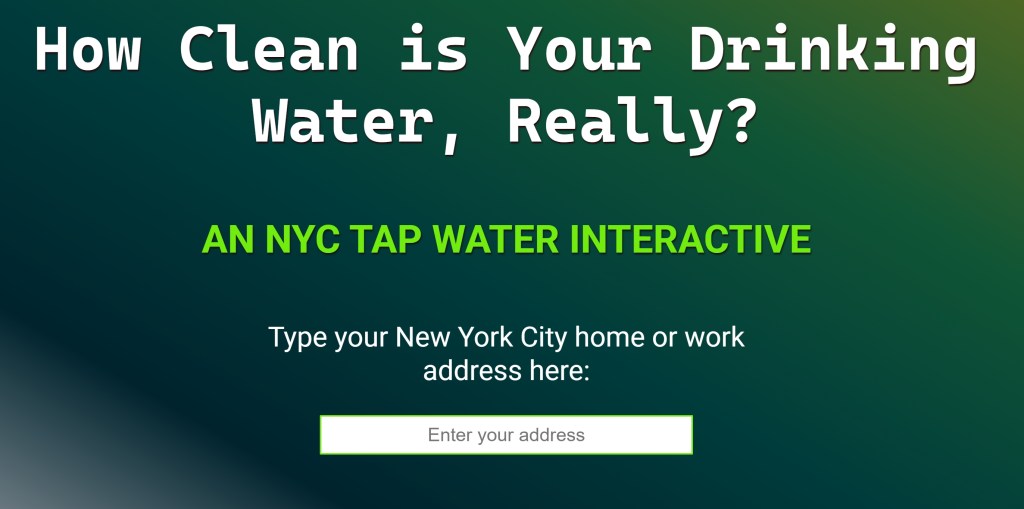
I used all my data skills—Python, scraping, coding, mapping. You name it. It became two journalistic pieces, multiple interactive maps, and an interactive tool for New Yorkers to check out their lead risk. I’m very proud of it and so grateful to my editors at Craig Newmark and THE CITY for helping it come to life.
Local News, Real Impact
Q: What is working at The City like?
Lizzie: It’s small and scrappy, but we get to pitch real stories, talk to people, and publish fast. We don’t have the resources of The New York Times, but we put the people we’re writing about first. That matters.

Q: You’ve described journalism as a kind of public service. What would our media landscape look like if we treated local reporting like clean water or public transit—essential and worth funding?
It would look like less media fatigue. If journalism were localized, reliable, and well-funded, we might not all be getting those boosted ads from some sensationalist piece that doesn’t have much bearing on our lives. We’d know what to pay attention to, and what to keep our eyes on in the news cycle, and we might spend less time staring at our phones and eyeing the doom-filled abyss of endless legacy news…By the way, we could also use a little more funding for clean water and public transportation.
Editor’s Note: Some responses have been edited for length and clarity, with a few additional questions added. The original article was published on July 26, 2025, and you can read it in full at our partner publication, PR Carnet World.
 No Apologies
Leave a comment