Bad Bunny’s Super Bowl LX Halftime Show
by: Tricia Cherie
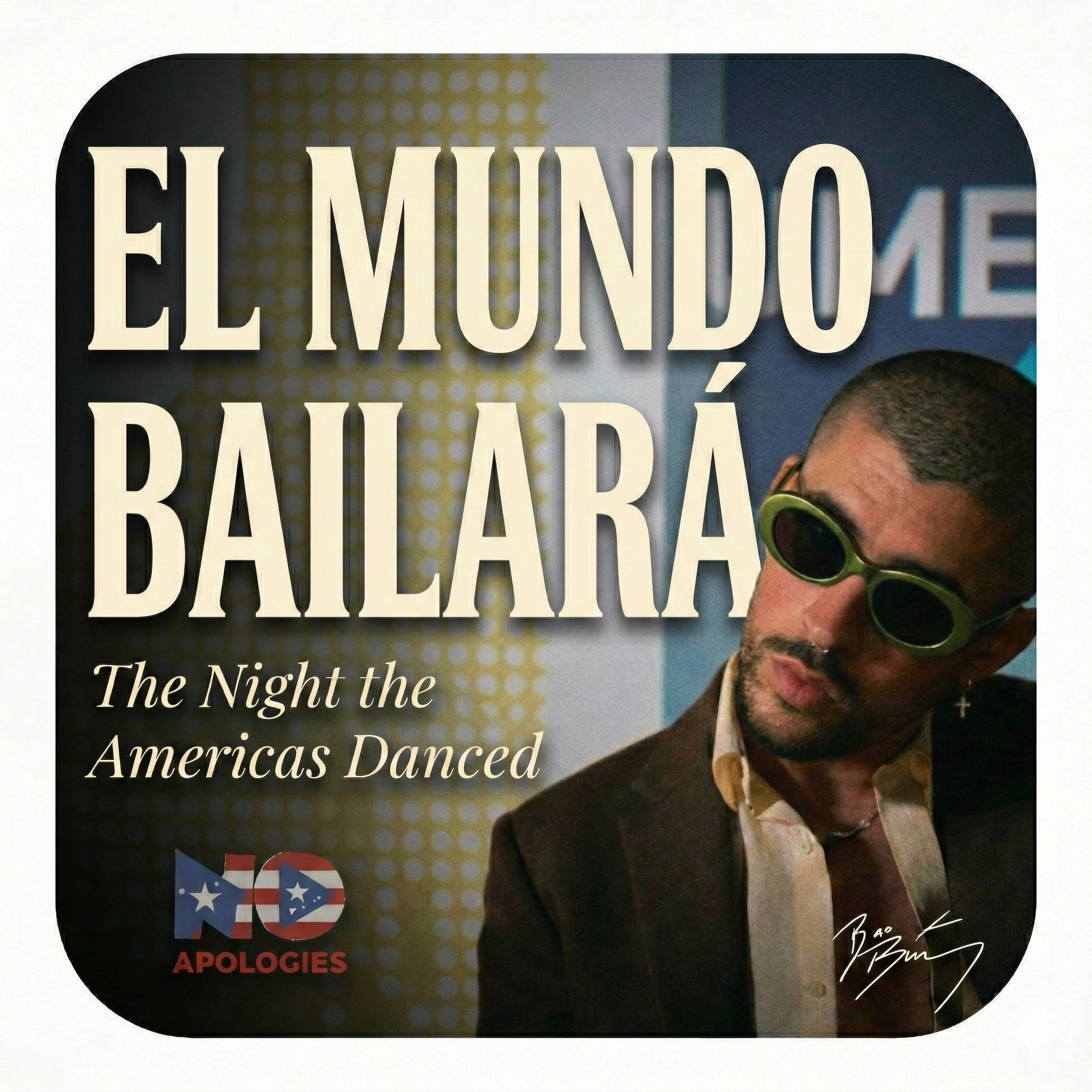
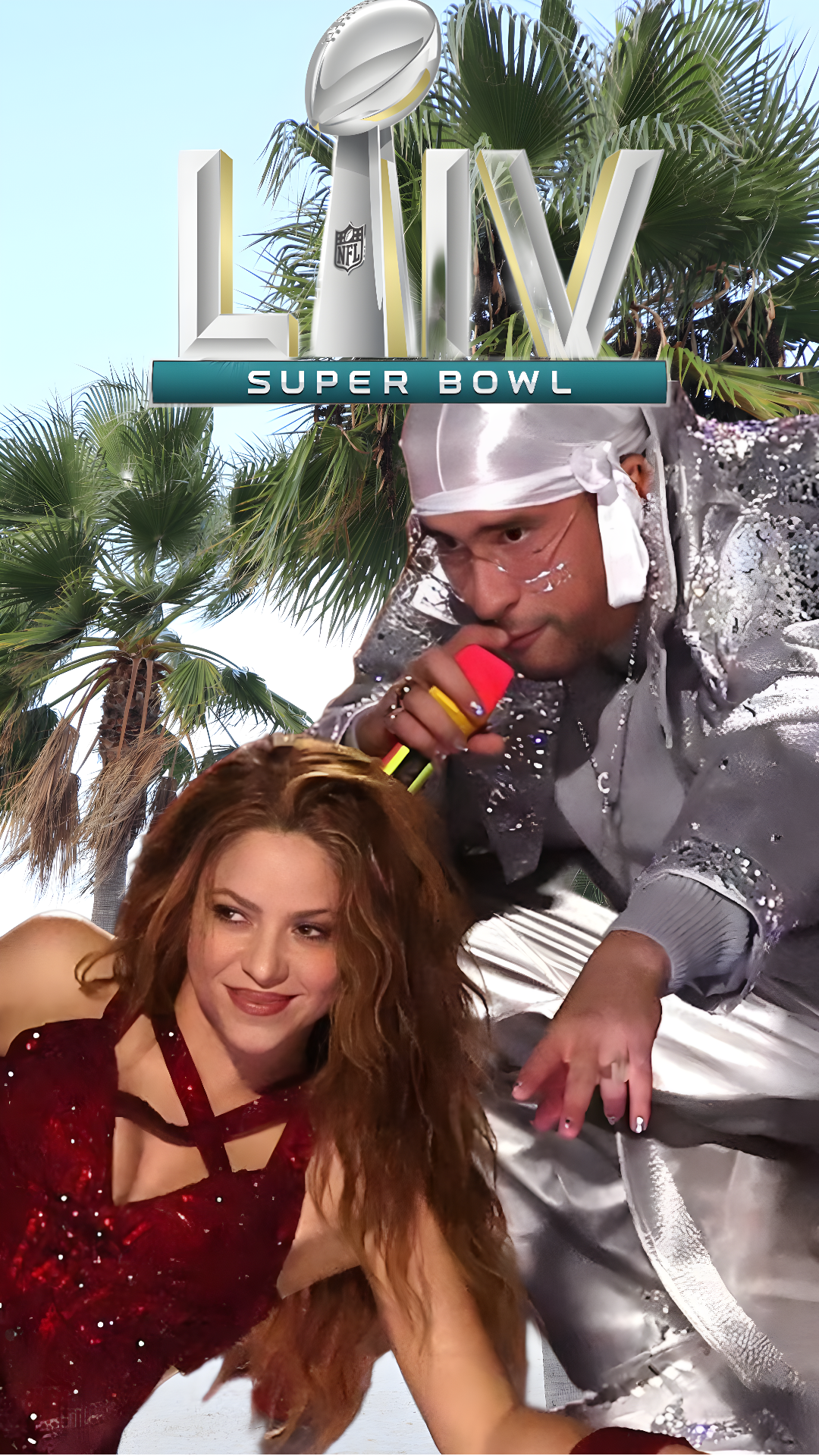
Six years ago, Benito Antonio Martínez Ocasio walked onto the Super Bowl stage as a guest in Miami. On Sunday night, he walked out as the headliner. And he moved like someone who knew the world was watching.
Punk Rock Pre-Show
The 5-minute, 12-second opening set from Green Day was tight and deliberate. Billie Joe Armstrong’s vocals were sharp, and when drummer Tré Cool grinned after the now censored “Subliminal mindf— America” lyric from American Idiot.
It wasn’t nostalgia; it was a reminder.
Twenty years later, the disaffected youth anthem still hits. From Bush-era confusion and Islamophobia to the 2026 Trump presidency, the message hasn’t aged — it’s metastasized.
The Wedding and the Witness
Midway through the set, a real wedding played out on stage. Lady Gaga joined for a salsa-infused rendition of her 2024 hit “Die With a Smile,” and Ricky Martin took the stage to perform “What Happened in Hawaii,” a song that critiques U.S. colonial history.
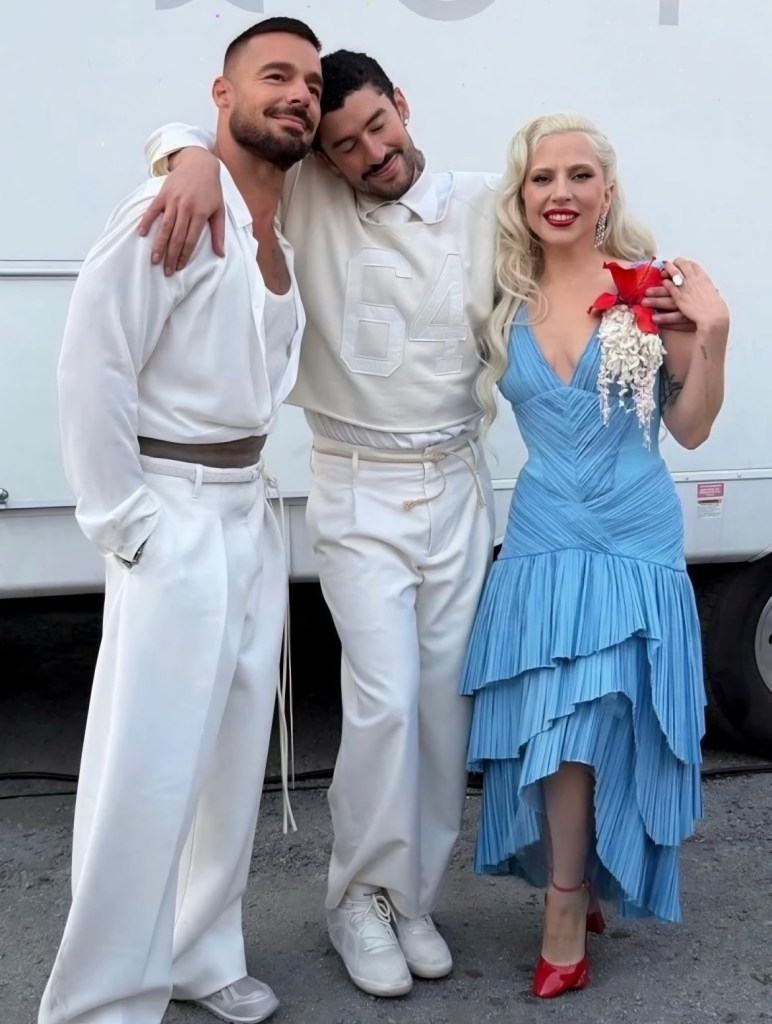
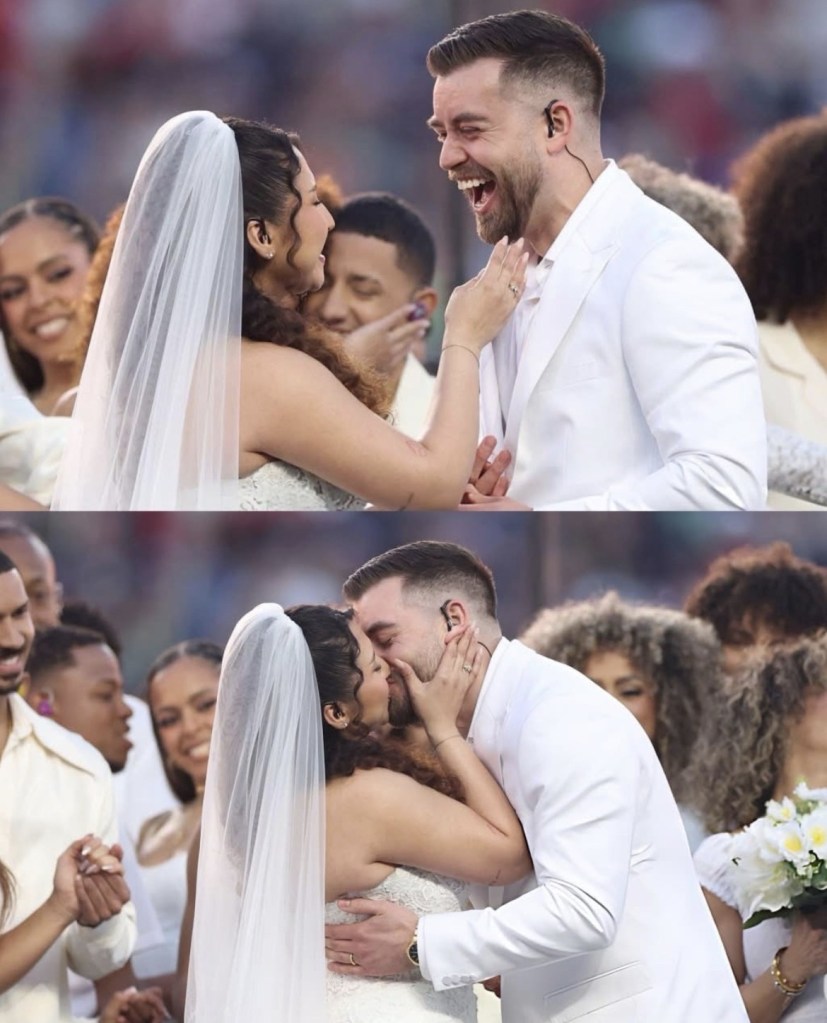
Bad Bunny signed the marriage certificate as a witness.
It was theatrical. It was communal. It was intentional.
Electrical poles rose from the turf as Benito launched into “Blackout,” referencing Puerto Rico’s devastating 2016–2017 grid collapse after Hurricane Maria. Dancers climbed the structures, evoking the residents who risked their lives restoring power while the territory waited — largely unsupported — in darkness.
Even the moment where he handed a Grammy to a young boy — a visual of possibility — felt layered. It was about dreams. It was about children. It was about futures that belong to all children.
The Legacy Continues
As Benito stood center stage, the stadium lights catching the light-blue triangle of the Puerto Rican flag behind him, he did something deceptively simple. He began naming the nations of the Americas. One by one. Not the United States as the singular center. Not a hierarchy. A hemisphere.
And then the flags came out.
Acting as a living, breathing reminder that America is not a gated community. It is a continent. It is layered. It is brown and Black and Indigenous and immigrant and complicated and beautiful.
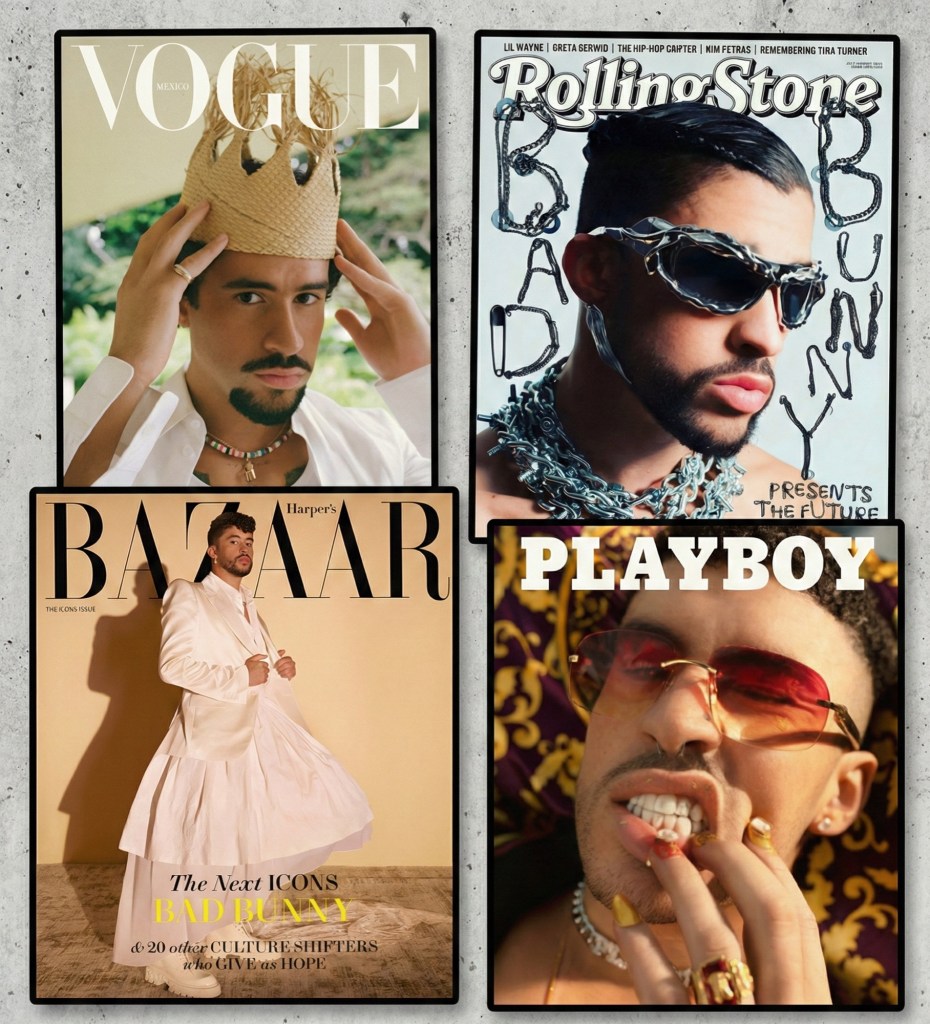
Clockwise from left: Vogue México (May 2025), Rolling Stone (2023), Harper’s Bazaar (August 2022), Playboy (July 2020).
For a country exhausted by the grind of a divisive news cycle — trauma-loop headlines, culture-war theatrics, endless performative outrage — the moment felt like oxygen. Grown adults cried in living rooms across the United States.
Bad Bunny — a Latino rapper from Puerto Rico, a U.S. territory often treated as an afterthought — stood on the biggest stage in American sports and reminded the country of its aspirational self. The version of America that believes dignity belongs to everyone. The version that dances before it divides.
Numbers Don’t Lie
As soon as the show ended, listeners went straight to their phones. On Spotify, U.S. streams surged 470 percent during the late-night hours following the performance compared to the week prior. Amazon Music saw a similar rush, with streams climbing 480 percent.
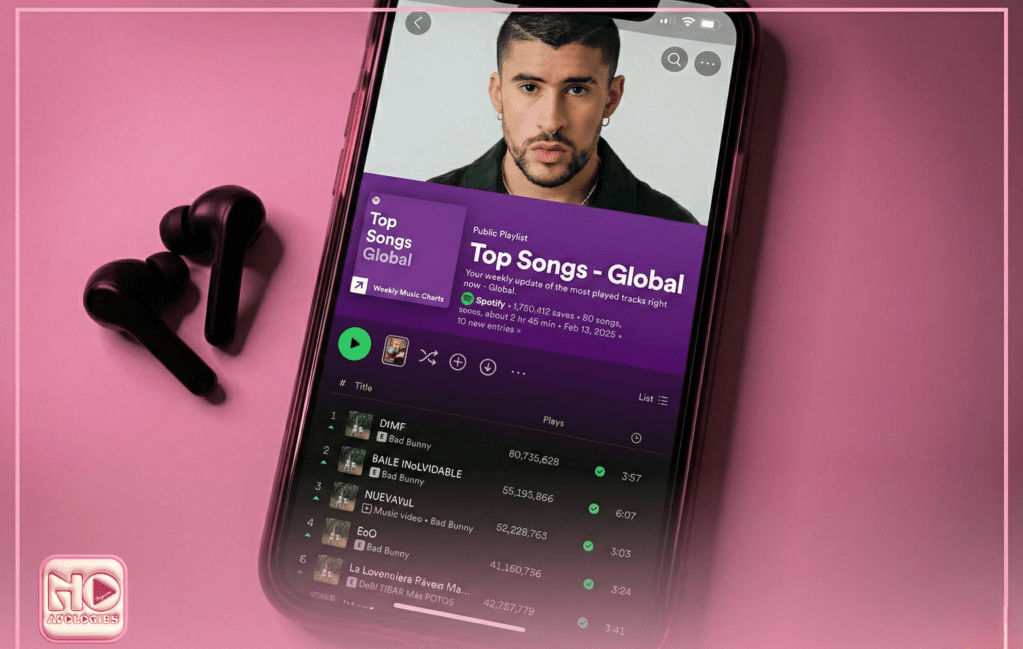
Shazam told the same story. Viewers who didn’t already know the songs reached for their phones. Apple Music said it was the biggest day ever on Shazam for any Latin or non-English-language artist. Searches for Bad Bunny’s catalog jumped more than 400 percent during and right after the show compared to an average day.
By Monday morning, Apple Music confirmed his halftime playlist had become the platform’s most-played set almost instantly. He placed 23 songs on the Daily Top 100 Global chart, with “DtMF” hitting No. 1. Debí Tirar Más Fotos charted in 155 countries, reached the Top 10 in 128, and went No. 1 in 46, from Mexico and Colombia to Germany, France, and Spain.
A reminder that the arts remain inherently human and forever unifying.

From Egypt to the End Zone: Why Bad Bunny’s Halftime Show Felt Like Home
When the world’s biggest stage carried memories of plastic chairs, wedding nights, and music that knows no borders.
By: Farah Kahled
Though I come from Egypt, which is so far from the United States, Bad Bunny’s halftime show had me tearing up and jumping from my couch all in one performance.
I felt a sense of pride and joy as I watched Bad Bunny, relating to those quick moments in the performance.
The wedding scene with the sleeping kid reminds me of being a young child at my family’s weddings, falling asleep on a random chair as music blared from the speakers.
I didn’t remember exactly what was happening, but someone’s jacket draped over me to keep me warm as my family danced through the night.
I remember that sweet plastic chair I sat on growing up, especially during summer at the beach, which held stories, our songs, and the ice cooler with sandwiches and drinks as we played, with the waves crashing nearby.
To me, the halftime show resonated deeply with each story and song, and I ended up crying right after I finished watching because, to me, music unites us no matter where we’re from.
When Bad Bunny entered and sang “BAILE InolVIDABLE,” I felt a rush of pride; I could feel the lyrics and all their emotions, and I felt so connected to the story. When it comes to music, if you understand the instrumental and the story, then you’ve understood what the artist is trying to convey.
Watching the performance from afar, in a different country, a smile spread across my face. I felt a sense of solidarity, and I kept thinking about how I related to the set, the dancing, the music, and the lyrics.
I felt the excitement, the dancing, the love, and the passion—all at once. I got so hyped that I jumped out of my seat when he finished with DtMF, trying to catch the lyrics, waving my hand, and shouting along as much as I could.
What made it even more special was seeing on social media how many others felt every word and idea from the performance.
No matter who or what the music is about, you always connect and understand because music transcends everything in life. It always carries a message.
At the end of the day, music is politics.
 No Apologies
Leave a comment